
Clinical Presentation
A 38-year-old woman presented with right upper quadrant (RUQ) abdominal pain for two days. The pain was constant, moderate to severe, and radiated to the right shoulder. It was associated with nausea and vomiting, and worsened after meals. She reported a low-grade fever but no jaundice.
There was no history of liver disease, alcohol use, or previous abdominal surgery.
Physical Examination
- Localized tenderness in the right upper quadrant
- Positive Murphy’s sign on deep palpation
- Mild fever (38°C)
- No clinical signs of chronic liver disease
Based on the clinical picture, a hepatobiliary cause was suspected, and ultrasound was requested as the first-line imaging modality.
Ultrasound Examination
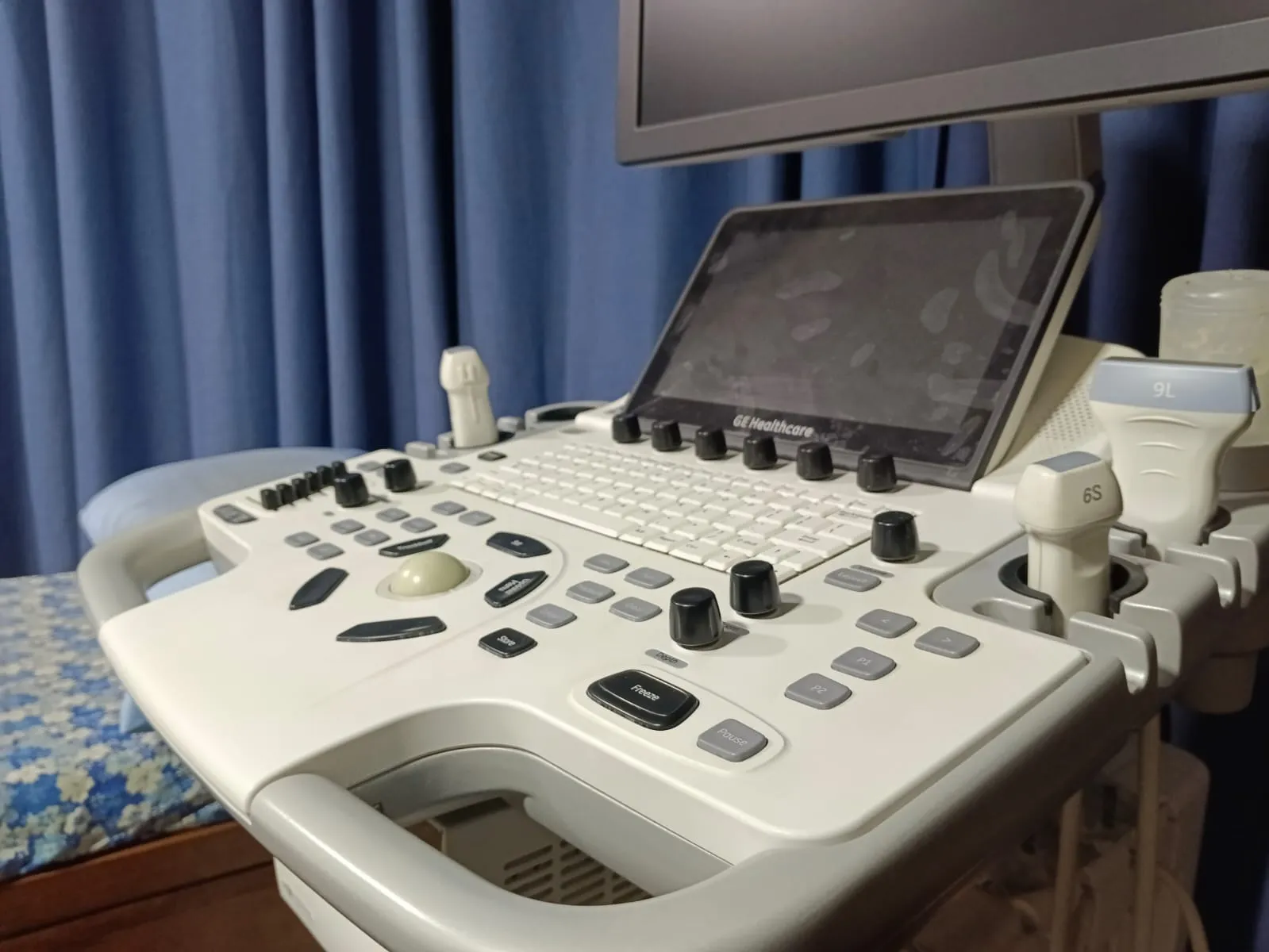
A standard transabdominal ultrasound was performed after a short fasting period.
Key Ultrasound Findings
- Gallbladder:
- Multiple echogenic foci with posterior acoustic shadowing, mobile with patient position → consistent with gallstones
- Gallbladder wall thickness: 4.5 mm (thickened)
- Gallbladder appeared distended
- Sonographic Murphy’s sign: Positive (maximal tenderness when probe pressed over the gallbladder)
- Pericholecystic fluid: Minimal fluid noted
- Common bile duct (CBD):
- Diameter within normal limits (5 mm)
- No intraductal stones visualized
- Liver: Normal echotexture, no focal lesions
- Pancreas: Visualized portion appeared normal
Ultrasound Impression
Findings consistent with acute calculous cholecystitis, with no sonographic evidence of biliary obstruction.
Clinical Decision and Management
Based on the ultrasound findings and clinical correlation:
- The patient was admitted
- Started on intravenous fluids, antibiotics, and analgesics
- Surgical consultation was obtained
- Laparoscopic cholecystectomy was planned after stabilization
The ultrasound findings helped:
- Confirm the diagnosis quickly
- Exclude alternative causes such as liver pathology or biliary obstruction
- Avoid unnecessary delays or additional imaging
Differential Diagnoses Considered (and Excluded)
| Condition | Why Considered | Why Less Likely on Ultrasound |
|---|---|---|
| Biliary colic | RUQ pain | Wall thickening, fever, and fluid favored cholecystitis |
| Hepatitis | RUQ pain | Normal liver echotexture |
| Choledocholithiasis | RUQ pain ± jaundice | Normal CBD diameter |
| Liver abscess | Fever, pain | No focal hepatic lesion |
| Pancreatitis | Upper abdominal pain | Normal pancreas, no duct dilation |
Practical Learning Points
- Ultrasound is the first-line investigation for right upper quadrant pain
- The combination of gallstones + wall thickening + sonographic Murphy’s sign is highly suggestive of acute cholecystitis
- A normal CBD diameter helps exclude biliary obstruction but does not rule out microlithiasis
- Clinical correlation is essential—ultrasound findings should always be interpreted in context
- Early ultrasound can significantly reduce diagnostic delay and improve patient outcomes
Common Pitfalls to Avoid
- Scanning a non-fasted patient, leading to false gallbladder wall thickening
- Mistaking bowel gas for gallstones
- Overlooking the CBD measurement in suspected biliary disease
- Relying on gallstones alone without assessing inflammatory signs
Conclusion
This case highlights how ultrasound plays a central role in evaluating right upper quadrant pain, guiding timely diagnosis and management. With a systematic approach and attention to key sonographic signs, ultrasound provides rapid, reliable answers in everyday clinical practice.